Our learning blueprint design focuses on creating an interactive probability learning resource that is engaging, flexible, and accessible for all learners. After learning about Universal Design for Learning (UDL) and accessible content, I realized that students learn in many different ways, so learning activities should be designed to support learner variability instead of assuming there is one “average learner.”
Since our topic is probability, we want students to learn through hands-on and interactive experiences instead of only reading information or completing worksheets. Our learning resource will include activities like spinning a wheel, rolling dice, flipping coins, and predicting outcomes to help students connect probability concepts to real-life situations. These kinds of activities make learning more engaging and can help students better understand ideas like chance, outcomes, and likelihood.
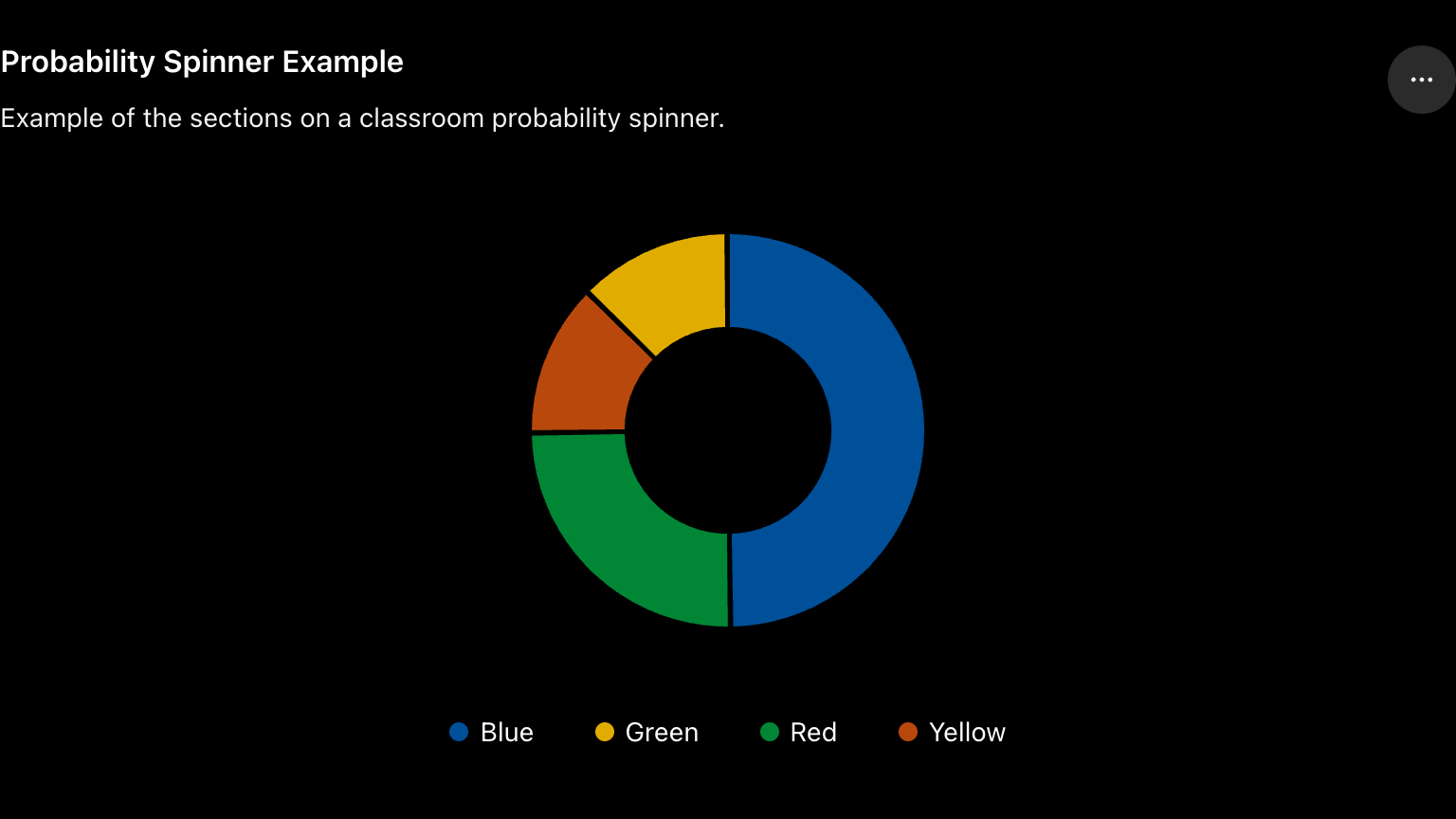
Students could use a virtual spinner to predict which colour it will land on most often. This helps learners visually understand probability and compare outcomes through experimentation instead of only memorizing definitions.
To support different learners, our resource will present information in multiple formats. Instead of relying only on written explanations, students will also have access to visuals, short videos, audio instructions, and interactive games. For example, learners may watch a short animation about probability, complete drag-and-drop activities, or test predictions using a virtual spinner. This connects to the UDL principle of providing multiple means of representation and engagement because students can interact with content in ways that work best for them.
Accessibility is another important focus in our blueprint design. The readings about accessible content showed how small design choices can reduce barriers for learners. Because of this, we would include captions on videos, readable fonts, clear headings, simple instructions, and alt text for images. We also want the resource to be easy to navigate so students can focus on learning instead of struggling with the technology itself.
Another way our learning resource supports all learners is by allowing students to demonstrate understanding in different ways. Instead of only answering written questions, learners could explain probability concepts through discussion, complete interactive challenges, or create their own examples using games or visuals. Giving students different options recognizes learner variability and creates more pathways for success.
Overall, our learning blueprint design focuses on creating a probability learning environment that is interactive, inclusive, and supportive for all learners. Inclusive design and UDL helped me understand that educational resources should be flexible and accessible so that every student has an equal opportunity to participate and succeed.
References
Universal design – EDCI 335. (n.d.). EDCI 335. https://edtechuvic.ca/edci335/universal-design/
Inclusive learning design – EDCI 335. (n.d.). EDCI 335. https://edtechuvic.ca/edci335/inclusive-learning-design/
I like your approach to teaching probability through hands-on virtual experiments like spinning wheels and rolling dice instead of just relying on static text. My group is taking a very similar interactive approach by having learners actually generate and crack password hashes themselves, and it really reinforces how crucial those multiple means of engagement are for making abstract concepts click. Your point about ensuring the technology itself is easy to navigate so it doesn’t become a barrier is such an important takeaway for designing truly accessible learning spaces!